 Exbio Βιολογια και Κοινωνια

New DNA analysis links Deep Maniots to Greece’s premedieval past
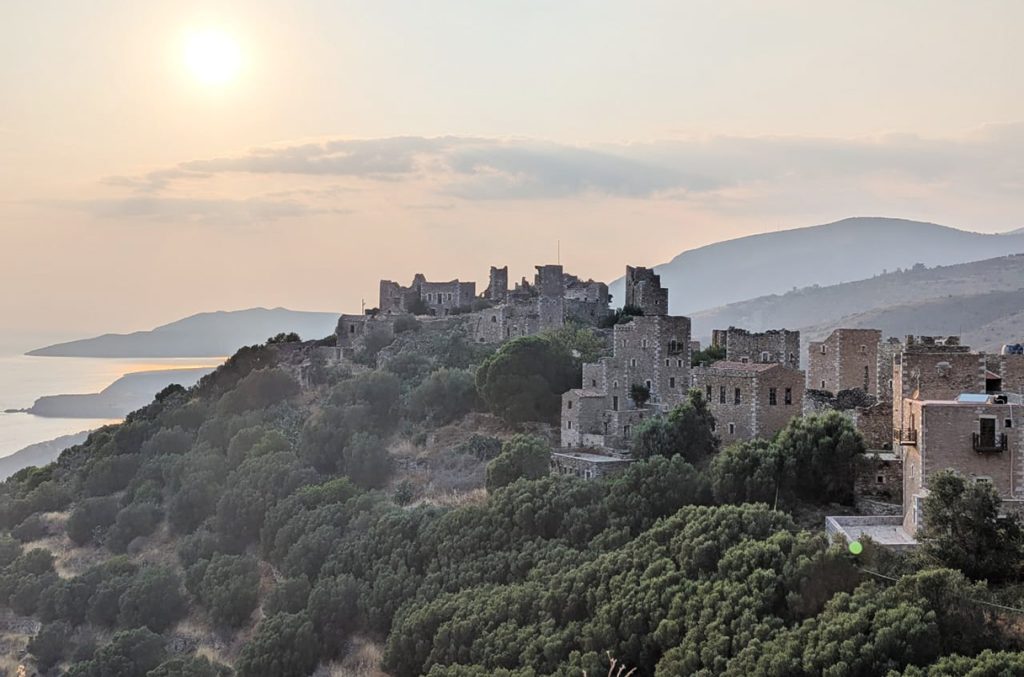
On southern Greece’s mountainous Mani Peninsula, a tightly clannish group of people known as Deep Maniots keep to themselves. Wary of outsiders, the isolated group maintains a distinctive society organized around male family lines, as well as a proud oral tradition claiming ties to medieval nobility.
A study published this week in Communications Biology suggests the Deep Maniots’ isolation goes way back, with most Deep Maniot men descending directly from Greek-speaking groups that lived in the area before the medieval period. Genetic analysis also reveals very limited intermixing from other populations, while showing that women of the culture often migrated to the Mani Peninsula from far-flung regions around the world.
“This idea of Mani as a distinct, rebellious people who preserved the Greek past is alive and well in the Greek imagination,” says Rebecca Seifried, an archaeologist and geospatial data expert at the University of Massachusetts Amherst who was not involved with the work. But “genetic isolation does not necessarily mean cultural isolation, and this study highlights that.”
One of the new study’s authors, Thanasis Kofinakos, is himself Deep Maniot. He grew up hearing about his people’s ancient origins. To test whether these oral traditions held any truth, Kofinakos, an independent genealogist, and his colleagues set out to learn where Deep Maniots come from.
Working with Leonidas-Romanos Davranoglou, a biologist at Tel Aviv University, the University of Oxford, and the University of Athens, he and colleagues compared Deep Maniot genomes with more than 1 million modern genomes and thousands of ancient genomes. The researchers focused on paternal and maternal lineages, looking at genes inherited on the Y chromosomes and from mitochondrial DNA respectively. Any overlap—or lack thereof—between Deep Maniot genomes and others from around the world would help determine the populations most closely related to the Deep Maniots.
The researchers found that Deep Maniots’ Y chromosomes did not match well with any modern population, supporting the idea that the group has remained more or less isolated since at least the Bronze Age more than 4000 years ago, based on genetic estimates of when these lineages last mixed with others. In contrast, the genomes of mainland Greeks show clear signs of intermarrying with other groups, such as the Slavs. “We show conclusively that Deep Maniots were somehow shielded from these migrations,” Davranoglou says. Maniots “provide us with a snapshot of what Greek genetics would have been prior to the medieval times.”
Why the group was so isolated remains an open question. Some historians theorize that Deep Maniots physically fought off outsiders, whereas others argue the harsh environment of the Mani Peninsula deterred migrants.
However, outsiders clearly joined the society. Although the data from paternal DNA suggest Deep Maniot women tended to have children with local men, maternally inherited DNA suggests women outside the peninsula—from elsewhere in the Mediterranean, Europe, and Africa—occasionally broke into the Deep Maniot ranks. Deep Maniot women have been historically understudied, Davranoglou says, and new evidence that ancient women traveled to Mani from distant lands to form families came as a surprise.
The new study also revealed that more than half of present-day Deep Maniot men come from a single male ancestor who lived in the seventh century, a period marked by invasions, disease, and economic disruption across much of Greece. Maniot ancestors likely suffered a catastrophic population collapse at the time, the researchers say, as this date lines up with a period with sparse archaeological records.
One widespread legend holds that Deep Maniots descend from the ancient Spartans, a rigidly organized warrior society from classical Greece, but the researchers make clear that the new data offer no answers to that question. Ancient Spartan DNA has yet to be conclusively discovered, Kofinakos notes, so there isn’t a genetic point of comparison for the modern Maniot genome.
Chelsea Gardner, an archeologist at Acadia University who was not involved in the new research, says the study’s relatively small sample size of Deep Maniot genetics—only 102 people with confirmed Maniot ancestry—means its findings of genetic isolation should be taken with a grain of salt. A larger sample could reveal genetic links between Deep Maniots and other populations that this data set is too small to detect. “This is an interesting study, but it does not prove any cultural or historical reality,” Gardner notes.
Even so, the work adds another piece of the puzzle of ancient Maniot ancestry and helps scientists understand how groups of people moved in ancient times, Davranoglou says.
doi: 10.1126/science.z20xmzy